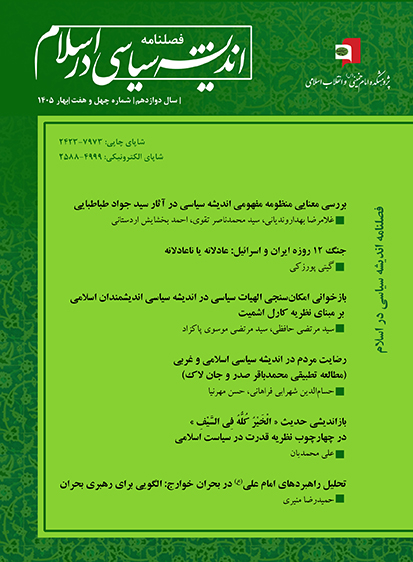
نوع مقاله : مقاله پژوهشی
عنوان مقاله English
نویسنده English
Imam Ali›s (AS) confrontation with the Khawarij was a profound political, social, and ideological challenge in Islamic history, the analysis of which can inspire contemporary leaders in managing complex crises. The aim of this research is to analyze Imam Ali›s (AS) leadership in confronting the Khawarij based on Joseph Nye›s «smart power» theory (a purposeful combination of soft and hard power). The objectives of the research include explaining Imam Ali›s (AS) behavioral pattern within the framework of smart power, identifying the components of soft and hard power used, evaluating the effectiveness of this approach in achieving security and ideological goals, and extracting practical lessons for managing ideological-security crises in the present era.The findings show that Imam Ali (AS) intelligently implemented a harmonious combination of hard power (such as decisive military action in the Battle of Nahrawan in response to terrorist violence) and soft power (including dialogue, debate, and explanation of intellectual deviations, inspirational leadership based on ethics, environmental intelligence in recognizing the social context, and flexible policies before conflict). This approach not only established the security of the society, but also severely weakened the ideological and popular legitimacy of the Khawarij. As a result, the theory of smart power in Imam Ali›s (AS) leadership model presents a comprehensive model of smart leadership in crisis.
کلیدواژهها English